World
Democrat accused of rape exits key US Senate race

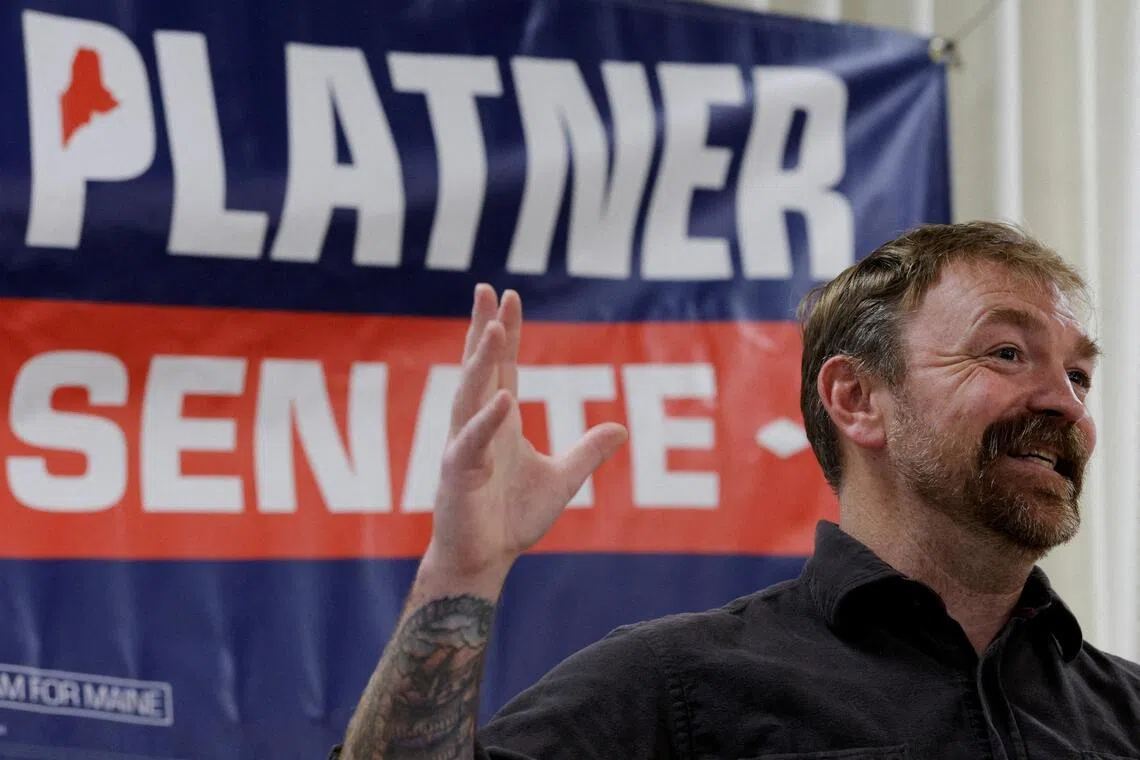
WASHINGTON – Graham Platner, a scandal-plagued Democratic Senate nominee whose insurgent rise had drawn comparisons to US President Donald Trump, ended his campaign on July 8 after a rape allegation threatened to derail one of his party’s best chances of flipping a Republican-held seat.
Platner, a Marine veteran, oysterman and political newcomer, won June’s Democratic primary in the north-eastern state of Maine to face Republican Senator Susan Collins in November’s midterm elections.
His withdrawal gives Maine Democrats only days to regroup in a race central to the party’s hopes of regaining control of the US Senate.
“We are suspending campaign operations,” Platner said in a video posted on X. “This is incredibly difficult, because I know that some will think it’s an admission of guilt, and it most certainly is not.”
“I intend to file my paperwork to withdraw,” he added.
Under Maine law, Democrats can replace Platner on the ballot because he quit before a July 13 deadline.
The state party has until July 27 to choose a new nominee.
The scramble comes after Politico reported on July 6 that Jenny Racicot, a 41-year-old Maine resident who previously dated Platner, accused him of forcing her to have sex in late 2021 despite her repeated objections.
Platner, also 41, strongly denied the allegation, calling it “troubling, serious and false” and saying any accusation of non-consensual behaviour was “categorically untrue.”
But his campaign rapidly lost support across the Democratic Party, from the Washington establishment to progressive lawmakers and activists who had previously defended him.
Senate Democratic Leader Chuck Schumer and Democratic Senatorial Campaign Committee chair Kirsten Gillibrand urged him to withdraw, warning that the party’s campaign arm would not invest in the Maine race if he remained on the ballot.
“We’re not doing it because of the allegations, we’re doing it because of the structures that are being taken away from us by those in power,” Platner said in the video on X.
Several other former Platner supporters in the Senate called for him to step aside, while the Maine Democratic Party said, “principle does not bend based on party affiliation” and urged Platner to quit.
The collapse of his campaign is a dramatic reversal for a candidate who only weeks ago was celebrated by supporters as proof that a blunt anti-establishment message could break through with voters tired of cautious Democratic politics.
Fervent following
Platner built a fervent following in Maine with attacks on corporate power, the political donor class, and Collins, whom he accused of serving billionaires rather than ordinary people.
His appeal drew comparisons to Trump’s own disruptive rise: personal magnetism, contempt for establishment politics and a promise to break a system many voters see as corrupt or exhausted.
But the qualities that thrilled his supporters also unsettled Democrats who feared his personal baggage could cost them a winnable race.
Even before the latest allegation, Platner’s campaign had been dogged by old incendiary online posts, sexually explicit messages sent to women early in his marriage, a tattoo resembling a Nazi symbol that he later covered up and allegations that he had mistreated women.
Platner has acknowledged past struggles with undiagnosed PTSD and alcohol abuse, but has denied physically harming former partners.
His exit leaves Democrats facing a compressed and politically fraught replacement process.
Progressives have already begun pushing for a nominee who can inherit Platner’s movement and policy agenda, while party leaders are under pressure to choose someone able to reassure moderates, independents and women voters in a state where Collins has repeatedly survived difficult races.
Collins, a five-term Republican and one of her party’s few remaining moderates in Congress, is among Democrats’ top targets in 2026.
But the turmoil around Platner has given her campaign a reprieve and exposed Democratic divisions over candidate vetting, populism and electability.
In the video, Platner called on “the Democratic establishment” to step up for the “will and the values” of the people of Maine, a largely rural and rugged state.
Maine is one of the party’s clearest Senate pickup opportunities, and Democrats likely need to gain several seats to win back the chamber. AFP