World
Could Israel aid mission open the door to renewed Venezuela-Israel relations?

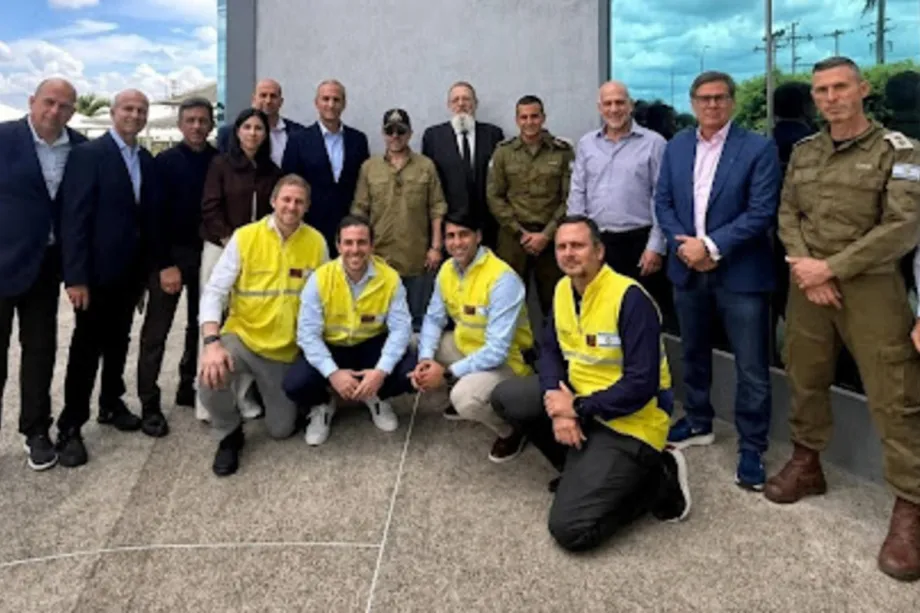
The arrival of an Israeli aid delegation from the humanitarian organization NATAN in Venezuela, following the powerful earthquakes that struck the country on 24th June, has triggered political controversy, particularly after images circulated showing members of the team wearing military uniforms and carrying the Israeli flag.
“Immediately after landing, the delegation members began a series of working meetings with local authorities, emergency services and other partners to assess the situation, identify needs on the ground, plan joint activity and finalize preparations for the start of operations,” Israel Defense Forces (IDF) and the Ministry of Foreign Affairs said in a joint statement.
The Venezuelan government sought to present the Israeli team’s arrival as part of a technical emergency response. Delcy Rodríguez, who replaced former President Nicolás Maduro after he was abducted by the U.S, said she had been informed of the arrival of one of the Israeli experts, accompanied by Rabbi Cohen, a representative of Venezuela’s Jewish community. She said the specialists would assess technical conditions in the affected areas and identify the rescue work needed before any reconstruction process could begin.
“Although Venezuela does not have diplomatic relations with some countries, they are here with us, and the Venezuelan people deeply appreciate this assistance”, she added.
The deployment has opened a broader debate over the line between humanitarian engagement and political messaging. Supporters argue that disaster response should be separated from diplomatic disputes and that medical assistance can create rare channels of human contact in politically closed environments. Critics, however, may view such missions as an attempt to improve Israel’s international image, especially when uniformed military personnel are visible in a country officially hostile to Israel’s policies.
Alice Miller, executive director of NATAN, said the organization’s priority is medical and humanitarian rather than political.
“When a disaster of this magnitude occurs, there is no time to lose,” Miller said. “Twenty years of experience have taught us that the first few hours are crucial, both medically and psychologically.”
“We didn’t arrive first with flags,” she said. “We arrived with medicine, listening and respect. That is often the most effective form of diplomacy.”
“In international relations, humanitarian missions promoted by states are rarely politically neutral,” Tenorio told MEMO. “Beyond assisting victims, they also function as instruments of soft power and diplomatic projection.”
He said the Venezuelan case carries particular symbolism because Caracas broke relations with Israel in 2009 in solidarity with the Palestinian people. According to Tenorio, that context makes the Israeli delegation’s arrival politically significant, regardless of the stated humanitarian objective.
“In Venezuela’s case, the symbolism is even greater because this is a country that severed relations with Israel in solidarity with the Palestinian people,” he said. “An Israeli mission represents much more than humanitarian aid. It creates an opportunity to open political channels where formal diplomacy has remained closed for nearly two decades.”
Tenorio argued that every humanitarian operation produces political effects, including institutional contact, trust-building and reputational gains. He said this dimension is especially relevant for Israel amid growing international criticism over the war in Gaza.