World
Chokepoints of power: Hormuz, Bab el-Mandeb, and the new corridor wars

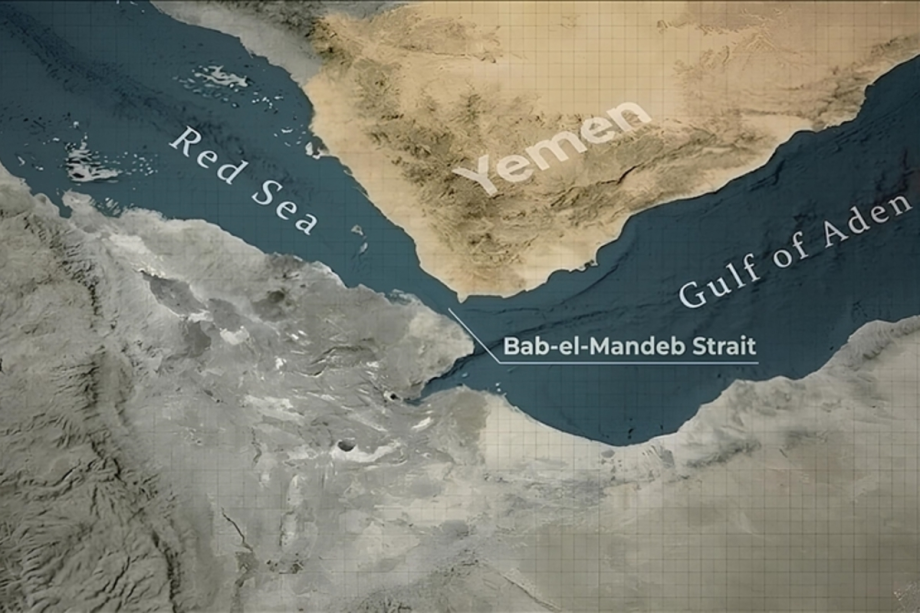
The concept of “corridor wars” describes intensifying competition among major powers over critical trade, energy, and transit routes in an era of weaponized interdependence. Unlike traditional territorial conflicts, these struggles center on controlling, securing, bypassing, or disrupting chokepoints: narrow maritime passages and overland links through which global commerce flows. Key arenas include the Strait of Hormuz, the Bab el-Mandeb Strait, the Red Sea, and connected corridors such as the Suez Canal.
As of July 2026, disruptions arising from the US-Iran conflict have exposed these vulnerabilities more clearly, with Hormuz largely blocked since February and threats extending toward Bab el-Mandeb. Instability at one chokepoint can therefore spread across a wider network of energy and trade routes, turning corridor security into a central issue of economic resilience and geopolitical power.
The Strait of Hormuz, between Iran and Oman, remains the world’s most critical energy chokepoint, handling roughly 20–21 million barrels per day of oil, or about 20–25 percent of global seaborne trade, along with significant LNG volumes from Qatar and the UAE. Iran’s retaliatory actions, including mining and attacks, effectively closed much of the strait following US-Israeli strikes in early 2026. These actions stranded vessels, disrupted shipping, increased uncertainty, and drove energy prices sharply higher. Brent crude rose above $100 per barrel and reportedly reached $126 during periods of peak tension.
Even a partial disruption can therefore place immediate pressure on supplies, shipping availability, freight costs, insurance premiums, and buyer confidence.
The simultaneous disruption of Hormuz and Bab el-Mandeb would be especially serious because the two chokepoints perform different but connected functions. Hormuz is central to Gulf energy exports, while Bab el-Mandeb and the Red Sea are essential to Asia-Europe trade. Combined disruptions could block a quarter of the world’s energy supply and create cascading effects across manufacturing, shipping, consumer prices, and supply-chain planning.
These chokepoints also intersect with broader corridor initiatives intended to diversify trade and reduce exposure to vulnerable routes.
The Middle Corridor, or Trans-Caspian route, has gained momentum amid the fallout from the Russia-Ukraine war, yet it faces Russian and Iranian resistance.
Overland alternatives can reduce dependence on maritime chokepoints, but they also create new reliance on political stability, infrastructure quality, border management, and cooperation in Central Asia and the Caucasus. Diversification therefore changes the geography of vulnerability rather than eliminating it.
Incorporating and critically assessing Anas Alhajji’s arguments
Energy analyst Anas Alhajji’s March 2026 tweet presents these developments as part of a calculated US strategy under President Trump to dominate strategic chokepoints for economic and technological supremacy. He argues that Trump seeks to reshore semiconductor manufacturing, expand US agricultural and LNG exports to Asia, especially India, and secure cheap energy for American AI companies while raising costs for rivals. In his interpretation, control over the Panama Canal, the Red Sea’s two ends, and the Strait of Hormuz would allow Washington to influence global energy flows and prices.
He cites halted Gulf exports of helium, fertilizers, and methanol as evidence, arguing that reduced helium supplies harm Asian semiconductor production, fertilizer disruptions pressure Indian agriculture, and methanol shortages affect industries in China, South Korea, and Japan. Alhajji also suggests that US naval protection and insurance arrangements provide de facto control over Hormuz, pushing Asian buyers toward American supplies. He views Venezuelan oil stockpiles in US ports as a hedge against Iraqi oil failing to reach the United States because of the strait’s closure. He concludes that Trump has achieved his main goals by using Iran as a pretext while expecting the Iranian regime to survive.
Alhajji’s thesis usefully highlights the geoeconomic motives behind energy and maritime policy. Energy can reinforce petrodollar influence, industrial competitiveness, technological development, and strategic leverage. His link between chokepoint control and AI dominance reflects the reality that data centers and advanced technologies require large, reliable, and affordable power supplies. He also draws attention to how higher insurance premiums and risk costs on Gulf cargoes can disadvantage Asian competitors while indirectly benefiting US producers. However, the argument overstates US orchestration and underplays unintended consequences and multipolar realities.
READ: Trump: No country ‘should be able to’ charge fee for Strait of Hormuz
The Iranian regime’s survival may result more from military calculations and escalation risks than from deliberate US design. Moreover, China’s BRI investments and Russia-Iran ties show that alternative networks remain resilient. Alhajji’s interpretation risks conspiratorial framing, yet it provides a useful lens for understanding how chokepoint leverage may serve broader industrial and technological policy.