World
Centuries-old whisky smuggler’s secret distillery discovered in Scotland

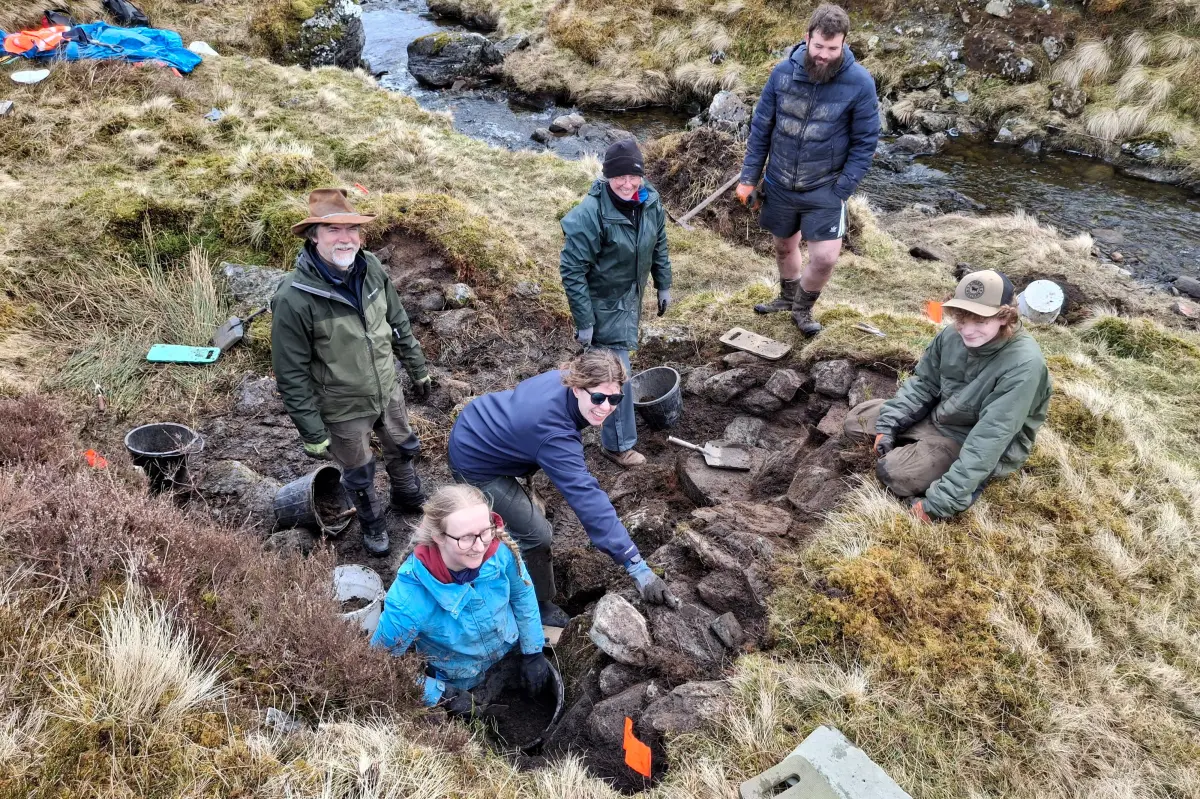
The remains of a 200-year-old whisky smuggler’s secret distillery have been discovered by archaeologists.
The stone structure found in Ben Lawers National Nature Reserve (NNR) was used as a site for making booze, experts say.
A piece of a copper still has been recovered as part of a targeted archaeological excavation.
The National Trust for Scotland’s Archaeology team believe the copper alloy collar is, in Gaelic, An Gearradan, ‘the connecting piece’ between the lyne arm and the head of the still.
This is supported by an illustration found in a Gaelic dictionary from the early 20th century, which depicts A Phoit-dhubh, or ‘black pot’, with the parts of a small whisky still labelled.
Further well-preserved features of the site provided clear evidence that the stone structure was a bothy purpose-built for clandestine whisky distilling.
This includes a well-constructed hearth and evidence of burning, a substantial stone-capped drain that ran beneath the internal floor, and a timber roof-support post, which appears to have been buried when the walls collapsed on top of it.
There are five known illicit whisky bothies on the Ben Lawers NNR, which is cared for by the National Trust for Scotland, but the discovery of the piece of copper still is unique to this site.
In the 1780s, unlicensed private distillation, which had existed in Scotland for centuries and on which many Highland tenants relied, was declared illegal.
Rather than pay the tax, distillers and smugglers went to great lengths to evade the excise officers, moving their illicit stills and hidden bothies into upland areas to avoid detection.
Derek Alexander, the National Trust for Scotland’s Head of Archaeology, said: “This is a wonderful example of how archaeology can tell a gripping story of spirit smuggling that would otherwise have been lost to time.
“In the early 19th century, illicit whisky distilling in these hills became a real battle of wits between excise officers and distillers.
“To find the remains of stills in these upland areas, you need to think like an excise officer.
“Those who distilled spirit in this bothy will have picked the location carefully to make sure they were well hidden.
“This bothy is well concealed along one arm of the Lawers Burn, nestled in a burn gulley where there’s a slight bend in the burn to shield the site from both upstream and downstream.
“The people who distilled here knew what they were doing, and it’s possible the still was never seized by the authorities.
“If the still had been found by the excise officers, the still would’ve been taken away and destroyed.
“So, the fact that we’ve found this connecting piece here suggests the still was dismantled in a hurry and its components whisked away by the smugglers as they dispersed.
“The connecting piece may have been forgotten in the rush and left behind.
“Distillers of illicit whisky would’ve travelled light and left little trace of their activity, and so a find like this is especially rare and exciting.
“It gives us a glimpse into an activity that was once rife in the hills of Ben Lawers and which was seen by many as an act of community resistance.”
The discovery was made as part of archaeological excavations undertaken at previously unexplored sites on the headwaters of the Lawers Burn, near Lochan nan Cat at Ben Lawers NNR.
Previous survey work by the Royal Commission on the Ancient and Historical Monuments of Scotland (RCAHMS) had identified these as sites of suspected illicit whisky-distilling.