World
Ceasefire deal with Iran ‘over’

US President Donald Trump yesterday said the ceasefire with Iran was “over” but left the door open to more talks as Tehran carried out new attacks on US bases in the Gulf in retaliation for US strikes on its military sites and key ports.
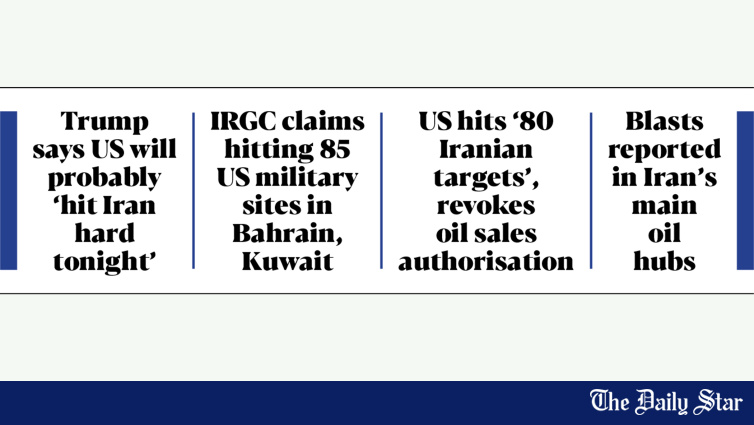
In a flare-up of hostilities that pushed oil prices up sharply, Iran said it had targeted “85 US military sites” in Bahrain and Kuwait after US forces struck “80 Iranian targets” in response to attacks on tankers in the Strait of Hormuz.
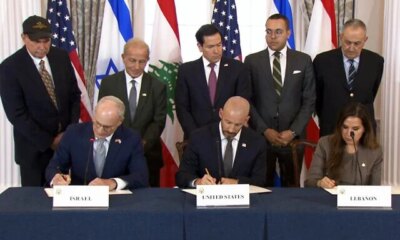
The attacks further undermined a shaky ceasefire agreement and dented hopes of turning the memorandum of understanding (MoU) signed on June 17 into a permanent peace deal to end the war, which began with US-Israeli airstrikes on Iran on February 28.
Asked before a Nato summit in Turkey whether the MoU was over, Trump said: “It’s a very interesting question. To me, I think it’s over. I don’t want to deal with them.”
“They’re scum. They’re sick people. They’re led by sick people,” he told reporters in Ankara. “As far as I’m concerned, it’s just a waste of time dealing with them.”
But he did not explicitly say Washington would return to full-fledged war or clarify if there would be further negotiations to turn the initial ceasefire deal into a permanent agreement.
He repeated his war aim that Tehran can never have a nuclear weapon but suggested that goal may need to be achieved without a deal.
“They’ll never build a nuclear weapon under our deal, but I don’t know if we’re going to have a deal. We may just do it without a deal, because you know what, it’s easier, because these people, what they lie and they cheat,” Trump said.
“I’ll let our wonderful negotiators keep talking if they want, but I don’t see it. I don’t like these people,” he said. “I’ll give a little warning: We’re going to hit them hard tonight,” Trump told reporters before he meets with Ukrainian President Volodymyr Zelensky.
Oil prices jumped, and global bond markets tumbled yesterday. Brent crude futures leapt 5 percent, the most in a day since late May, to $78 a barrel.
Iran’s top joint military command, Khatam al-Anbiya Central Headquarters, condemned the US strikes as a “blatant act of aggression,” threatened a “crushing response,” and warned that Tehran would not allow US interference in the management of the strait.
A top Iranian negotiator, parliament speaker Mohammad Baqer Qalibaf, accused the US of breaching the ceasefire agreement. He cited not only the latest US military strikes, but renewed oil sanctions, violations of Iranian “adjustments” in the Strait of Hormuz, and Israeli attacks against Lebanon.
“The era of bullying and extortion is over,” Qalibaf said in a post on X. “We don’t fold.”
Iran’s Revolutionary Guards (IRGC) said yesterday they had targeted US military sites in Bahrain and Kuwait and that they had shot down a US MQ-9 drone attempting to interfere in the operation.
The US had earlier unleashed new military strikes and revoked a licence allowing Iran to sell oil in response to attacks on three tankers in the strait.
US Central Command (CENTCOM) said its forces had struck over 80 targets, including Iranian air-defence systems, coastal radar sites, surface-to-air missiles, anti-ship cruise missiles, drone launch sites and 60 IRGC small boats.
The strikes aimed “to degrade Iran’s ability to continue attacking international commerce flowing through the international trade corridor”, it said.
Mark Rutte, secretary general of Nato, said at the summit in Ankara that the American strikes were “absolutely necessary”.
Tehran’s reply came quickly, with the Guards saying they hit dozens of US military facilities in Kuwait and Bahrain, where an AFP journalist heard blasts.
Kuwait said it intercepted two ballistic missiles and 13 drones, while the Iranian army said it had also attacked US forces at Sheikh Isa air base in Bahrain.
Iranian media earlier reported explosions in Iran’s main oil hub of Kharg Island, on Qeshm Island and in the southern port cities of Sirik and Bandar Abbas. CENTCOM made no mention of Kharg Island, from which Iran exports 90 percent of its crude oil.
The latest flare-up started as Iran tried to exert control over the Strait of Hormuz. Tehran insists on controlling the waterway, saying it will charge fees for passage and threatening to hit vessels that deviate from its authorised route.
Its military struck at least three ships in recent days, prompting the extensive US strikes.
The renewed hostilities have also heightened safety and security concerns around the Hormuz, with shipping data showing at least four oil and gas tankers had turned back rather than try to transit the waterway, a vital supply route.
China denounced the sharp escalation in hostilities in the Middle East, with Beijing’s foreign ministry warning both sides against “reigniting” the war in the Middle East.
The head of the International Maritime Organization yesterday called for “maximum restraint and de-escalation” as almost 6,000 seafarers remained stranded in the Persian Gulf amid fresh US-Iran attacks.