Society
CBN moves to rescue naira after dollar exchange rate crosses N1,400

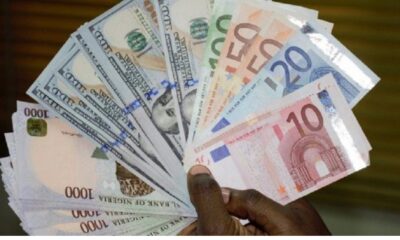
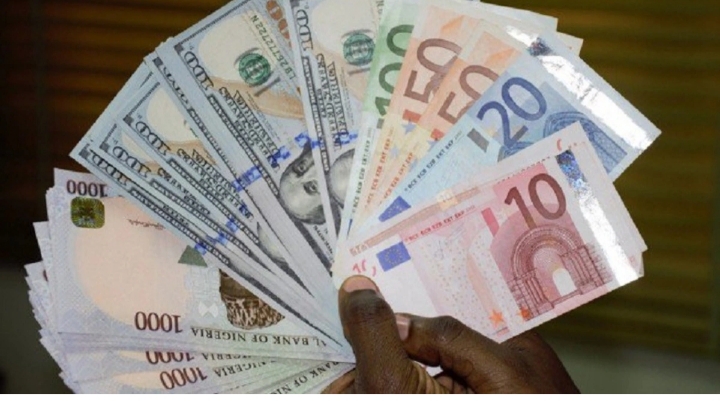
The naira has fallen to its weakest level in eight months against the US dollar, prompting the Central Bank of Nigeria (CBN) to increase its intervention in the foreign exchange market.
The local currency dropped to N1,394 per dollar on the official Nigerian Foreign Exchange Market (NFEM) last week before weakening further, with some market quotes crossing N1,400 per dollar.
The naira also lost value in the parallel market, where the dollar traded between N1,458 and N1,468.
To prevent further depreciation, the CBN reportedly injected about $1.3 billion into the foreign exchange market within one week.
The intervention helped increase trading activities in the interbank market, with total transactions reaching an estimated $2.55 billion over five trading days.
Meanwhile, CBN Governor, Olayemi Cardoso, said the Monetary Policy Committee (MPC) had decided to keep the benchmark interest rate unchanged at 23 per cent.
He explained that the decision was aimed at sustaining the recent decline in inflation and controlling rising prices.
Nigeria’s headline inflation dropped to 14.1 per cent in October from 14.6 per cent in September.
Cardoso expressed optimism that inflation would continue to decline in the coming months, supported by improved food supplies and stability in the foreign exchange market.
He said the committee would continue to monitor economic developments and take further action when necessary.
The decision to maintain the interest rate came amid increased political activities and concerns about the rising cost of living ahead of the January 16 presidential election, in which President Bola Tinubu is seeking re-election.
The naira has lost almost five per cent of its value against the dollar since the MPC’s last meeting in September, when it reduced the benchmark interest rate by 350 basis points.
Despite the recent decline, Cardoso said the pressure on the naira was largely due to the usual increase in demand for foreign exchange towards the end of the year.
He also dismissed concerns about the country’s external financial position, saying Nigeria’s foreign reserves had increased to $54 billion.
According to him, the reserves are sufficient to cover about 10 months of imports and are expected to increase further.
Cardoso added that borrowing costs remain high despite the September interest rate reduction, noting that Nigeria’s real interest rate spread of about nine percentage points remains among the highest in the world.