World
Can Social Democrats take advantage of Government and Sinn Féin struggles?

Here, we take a look at the issues likely to dominate political discourse in the week to come.
Social Democrats’ popularity rising
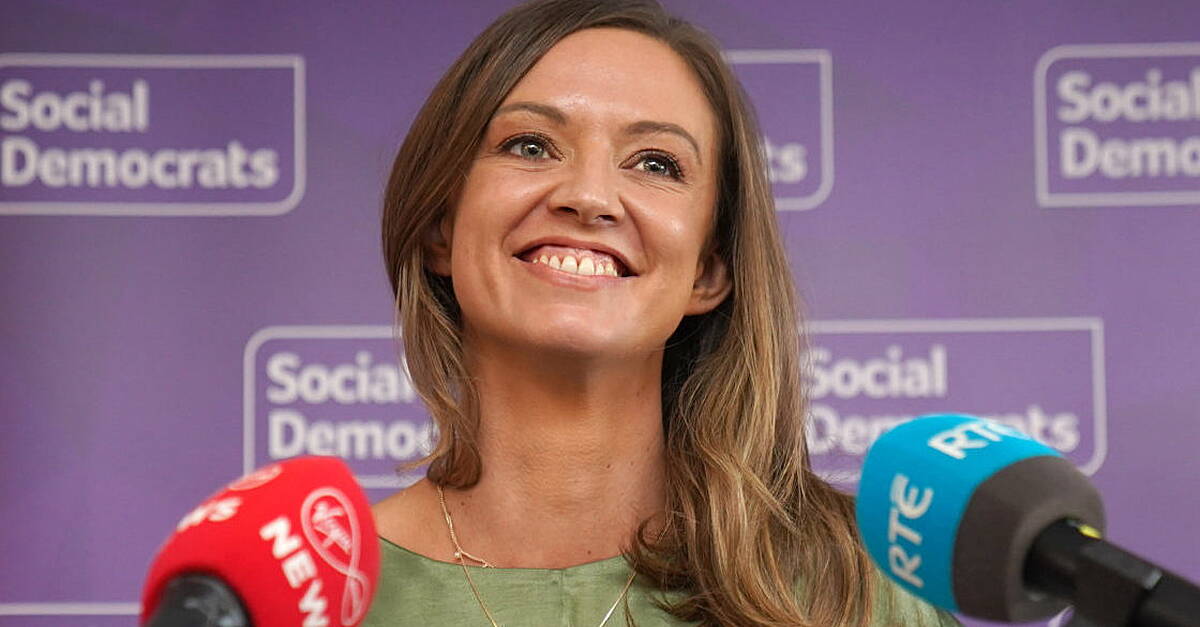
The Social Democrats‘ popularity is on the rise after a recent Dublin Central byelection victory and opinion poll success, and a senior TD in the party has said they plan to run a candidate in each constituency at the next general election.
Daniel Ennis secured a seat in a packed field in Dublin Central, bringing the party’s number of sitting TDs to 12.
Meanwhile a recent Red C/Business Post poll put the party on 12 per cent, just two points behind Fianna Fáil. Holly Cairns also regularly comes out on top as the most popular party leader.
In an interview with BreakingNews.ie, Jennifer Whitmore said: “What we hear from lots of people is they would love to have the chance to vote Social Democrats, but we may not have had a candidate in their area.
“We’re going to run a candidate in each of the constituencies because we do want to give people that choice.
“Yes. Holly has been very clear on this: we want a candidate in each constituency.
“We’re hoping the next general election will be a good one for us. At each milestone we’re hitting we are doing very well, and we would hope that will continue into the next local and general elections.”
Whitmore, who was first elected in 2020 before retaining her seat in the 2024 general election, said she is confident the party can take votes from people who have become dissatisfied with Fianna Fáil and Fine Gael, as well as opposition rivals like Sinn Féin.
“I think we will get votes from across the board. What we’re offering is something different. I think we’re offering positive politics. We really saw that play out in the Dublin Central byelection. Our profile, and how we attract people, might be different from what they’re used to; we’re looking for positive solutions and to be a positive force in politics.
“We have our principles and we stick with them, and I think that’s really important because people know what they get with us. That is a vital part of our identity.”
Occupied Territories Bill
A Bill banning the trade of goods from the occupied Palestinian territories has been passed by the Dáil.
The Bill was passed on Tuesday despite the Opposition arguing that it did not go far enough to combat illegal Israeli settlements on Palestinian land by omitting services.
Several amendments to the Government’s Bill, including an amendment to include services in the ban, were voted down.
The Government’s Bill prohibits the import of goods from “certain Israeli settlements”, in line with its international obligations as set out in the advisory opinion from the International Court of Justice from July 2024.
It was tabled to replace Independent Senator Frances Black’s 2018 Occupied Territories Bill, which banned all trade from illegal Israeli settlements in the Occupied Palestinian Territories.
The Israeli Settlements in the Occupied Palestinian Territory (Prohibition of Importation of Goods) Bill was tabled to replace Black’s Bill, which has been a popular demand from pro-Palestine protesters in Ireland.
But concern has been raised about the Government’s version of the Bill, which leaves out a ban on the trade of services.
The Government has said that a ban on the trade of services is more complex than goods and the Bill needs to be legally watertight before it is enacted.
Foreign Affairs Minister Helen McEntee has been back and forth with “questions and queries” to Attorney General Rossa Fanning on the Bill in the past few months.
Speaking in the Dáil on Tuesday, Minister of State at the Department of Foreign Affairs Neale Richmond said the Bill “fully” delivers on the Programme for Government pledge to prohibit goods from the occupied Palestinian territories.
He said the Government needed to “soundly and completely” produce legislation that was in line with international law, particularly if it was going to criticise Israel’s breach of international law in relation to illegal settlements.
He suggested that EU legislation meant there were “huge challenges” in the enforcement of a ban on the “broad and wide ranging” trade of services.
He said the EU is bound by international law and member states must identify the correct legal level at which to act.
He said if amendments proposed by opposition TDs were accepted, it would make the Bill “unworkable” and “wide open to legal challenge”.
Fast-track asylum claims scheme
A quarter of asylum claims refused under a new fast-track scheme have been issued with deportation orders.
The system, which requires rulings to be made within a 12-week window, has seen nine in 10 claims rejected.
The pilot scheme affects people seeking asylum from “safe” countries or where an earlier request has been made in another European Union country.
Immigration lawyer Cathal Malone said applicants can still appeal their refusals.
Malone told Newstalk: “Your first instance decision is within six weeks of applying. Your appeal decision is within another six [weeks].
“That is incredibly fast… to do things that quickly is obviously raising a huge host of issues. The first, and obviously most important, thing for people is their ability to access proper – or indeed any – legal advice.”
The new statistics are drawn from 2,272 claims for international protection.
Abroad
Reform UK leader Nigel Farage announced he will quit as an MP and fight a byelection after coming under intense pressure over unregistered donations of cash and support.
In a video statement, Clacton Farage said: “I have done nothing wrong. I have not broken the law in any way at all.”
Ireland
‘We want a candidate in each constituency’: TD says ‘positive politics’ behind Social Democrats’ rise
He accused the media of harassment and vowed to fight a “people versus the establishment” byelection.
French far-right leader Marine Le Pen said she would run for president in the 2027 election in an interview with broadcaster TF1 on Tuesday, her first public remarks since a French appeals court upheld her conviction for misusing EU funds.
Tuesday’s ruling had left the door open for Le Pen to run in the 2027 presidential election for the fourth time. Le Pen and her party have been favoured to lead in the first of the two rounds of elections.