Topnews
BREAKING: Trump’s $300B Iran investment fund may be ‘close to impossible’ due to IRGC sanctions law, expert warns

A proposed $300 billion investment fund for Iran included in the U.S.–Iran memorandum of understanding may face major legal obstacles under existing U.S. sanctions law, raising questions about whether the plan is workable even if both sides move toward a final agreement.
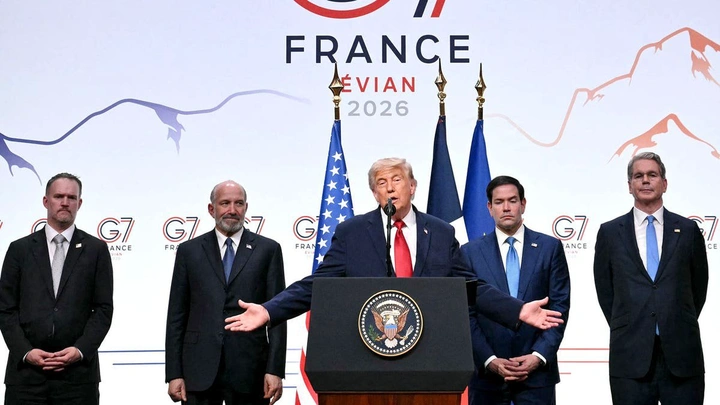
The memorandum, digitally signed Wednesday by President Donald Trump and Iranian President Masoud Pezeshkian, is aimed at ending the war and restoring traffic through the Strait of Hormuz. As part of the 14-point plan, the U.S. agreed to lift sanctions on Iran, allow Tehran to increase its oil revenue and regain access to parts of the international banking system, among other measures.
But one of the most ambitious parts of the framework — a proposed $300 billion private investment fund for Iran’s reconstruction and development — may collide with a longstanding U.S. determination that Iran’s construction sector is controlled directly or indirectly by the Islamic Revolutionary Guard Corps.
The issue is not just technical. It goes to whether one of the central economic promises of the Trump-Iran framework can realistically be executed under current U.S. law. If the $300 billion fund depends on investment in sectors Washington has already identified as IRGC-controlled, experts say the administration may be forced to rely on temporary waivers or new licenses — a legal structure that could make long-term investors wary and complicate any final deal.
The State Department formally determined in 2020, and again in May 2025, that Iran’s construction sector was controlled directly or indirectly by the Islamic Revolutionary Guard Corps. Under the Iran Freedom and Counter-Proliferation Act, known as IFCA, that finding creates sanctions risks for people or companies doing business in the sector.
Miad Maleki, a senior fellow at the Foundation for Defense of Democracies and a former Treasury Office of Foreign Assets Control executive, told Fox News Digital that the legal and sanctions-related problems surrounding the fund are more complicated than simply asking whether Congress would have to approve it.
“I think Congress is unavoidable for a durable version of that investment,” Maleki said. “If we have a final deal and now as part of this commitment, the U.S. government and allies are going to have to go in and help Iran to set up this fund or get access to such a fund.”
Maleki said the president has meaningful unilateral authority to begin easing restrictions. Trump could revoke relevant executive orders, direct the Treasury Department’s Office of Foreign Assets Control to issue general licenses and waive some congressional sanctions laws.