Politics
BREAKING: INEC Publishes Tinubu’s 2027 Documents With Basic Education Fields Blank

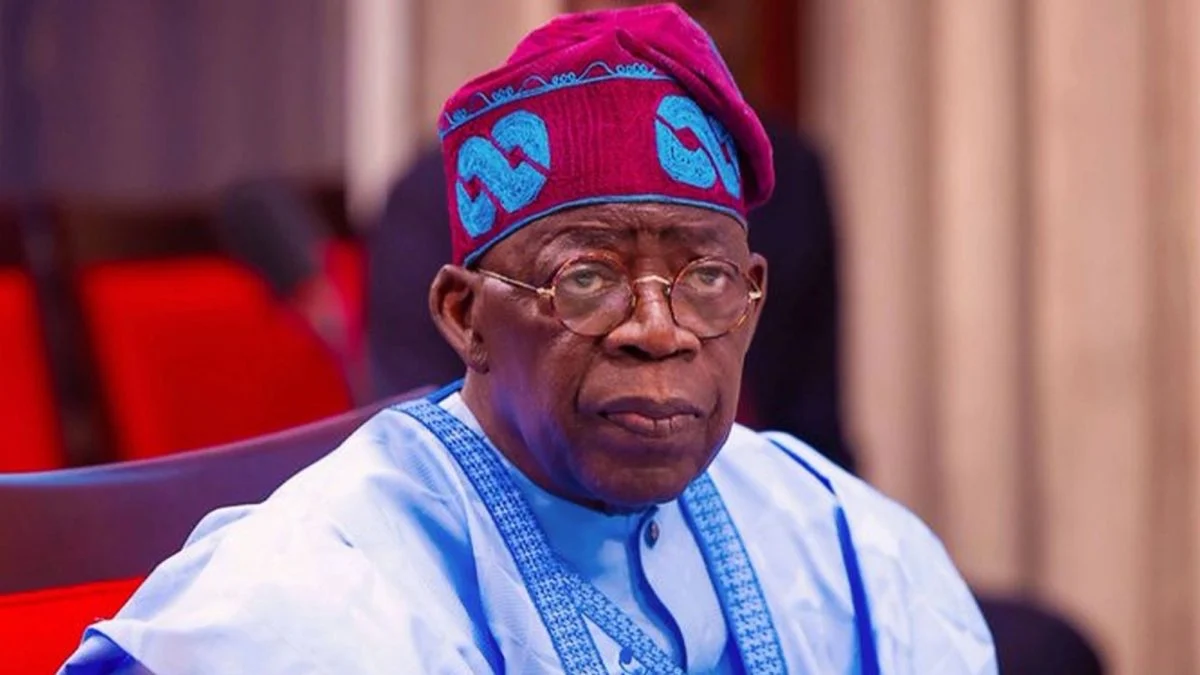
The Independent National Electoral Commission (INEC) has published the personal particulars of candidates nominated for the 2027 presidential and National Assembly elections, with President Bola Tinubu’s nomination documents showing that the sections for his primary and secondary education were left blank.
The documents, contained in Form EC9 and made available for public inspection in line with Section 29(3) of the Electoral Act 2026, include candidates’ personal details, educational qualifications, work history, affidavits and supporting documents submitted by political parties.
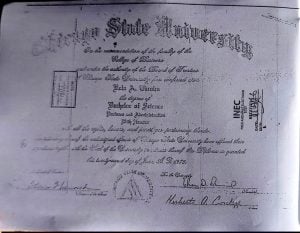
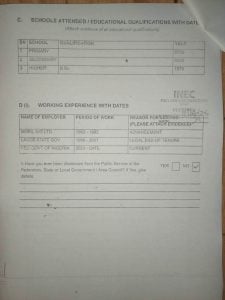
Tinubu’s Form EC9, filed for the 2027 presidential election on the platform of the All Progressives Congress (APC), lists only his Bachelor of Science (B.Sc.) degree obtained in 1979 under the “Higher” education category. The spaces provided for primary and secondary schools, including qualifications and years attended, were left blank.
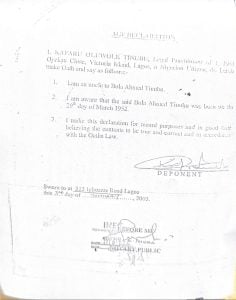
The nomination papers also contain a statutory declaration by Kabiru Olawole Tinubu, who identified himself as the president’s uncle. In the affidavit, he stated that he was aware Bola Ahmed Tinubu was born on March 29, 1952, and made the declaration “for record purposes and in good faith, believing the contents to be true and correct and in accordance with the Oaths Law.”
The documents further show Tinubu’s work history, indicating that he worked at Mobil Nigeria Limited from 1983 to 1992 before serving as Governor of Lagos State from 1999 to 2007. His current employment is listed as the Federal Government of Nigeria from 2023 to date.
INEC had earlier announced that the publication of the candidates’ particulars was in line with the commission’s timetable for the 2027 general election and was intended to allow members of the public to scrutinise the information submitted by candidates.
Speaking on the exercise, INEC National Commissioner and Chairman of the Information and Voter Education Committee, Mohammed Haruna, said, “The publication of the personal particulars of the presidential and national assembly candidates tomorrow is item 5. Those for governorship and state assembly candidates will be published on August 29.”
“All this is in conformity with Section 29(3) of the Electoral Act 2026, which provides for the publication of these particulars within 21 days of receiving them,” he added.
Also confirming the development, the Chief Press Secretary to the INEC Chairman, Adedayo Oketola, said the publication of Form EC9 is a legal requirement.
“Form EC9 contains the candidates’ affidavits, credentials, and other personal particulars that were submitted,” Oketola said.
“The documents will be displayed in all INEC state offices and offices in the constituencies. Section 29(3) of the Electoral Act, 2026, provides for the publication of Form EC9 within 21 days of receipt. So, this is in line with the revised timetable and schedule of activities for the 2027 general election released on February 26, 2026.”
INEC, however, stressed that the publication of the documents does not amount to the release of the final list of candidates. According to the commission, political parties have until August 22, 2026, to withdraw or substitute nominated candidates, while the final list of presidential and National Assembly candidates will be published on September 12, 2026.
The publication comes days after former Secretary to the Government of the Federation, Babachir Lawal, claimed that late former President Muhammadu Buhari had repeatedly expressed concerns about Tinubu’s educational background and genealogy before later acknowledging the crucial role he played in helping him become president.
During an interview with Symfoni TV, Lawal said Buhari had access to intelligence reports on Tinubu’s background but eventually accepted that Tinubu’s political support was instrumental to his emergence as the APC presidential candidate and eventual victory in the 2015 general election.
“So anytime Buhari complained about Tinubu, I would bring up the history, and Buhari, being a man of conscience, would agree. The complaints were about Tinubu’s upbringing and education,” Lawal said.
“He had access to files on Tinubu, but I told him, ‘You knew all this when you asked for his support, and he gave it to us. So why bite the finger that fed us?’ Buhari agreed and changed.”