World
Bad news for Shehbaz Sharif, Asim Munir as Indus Water Treaty suspension sparks distress in Pakistan, leadership in crisis due to…

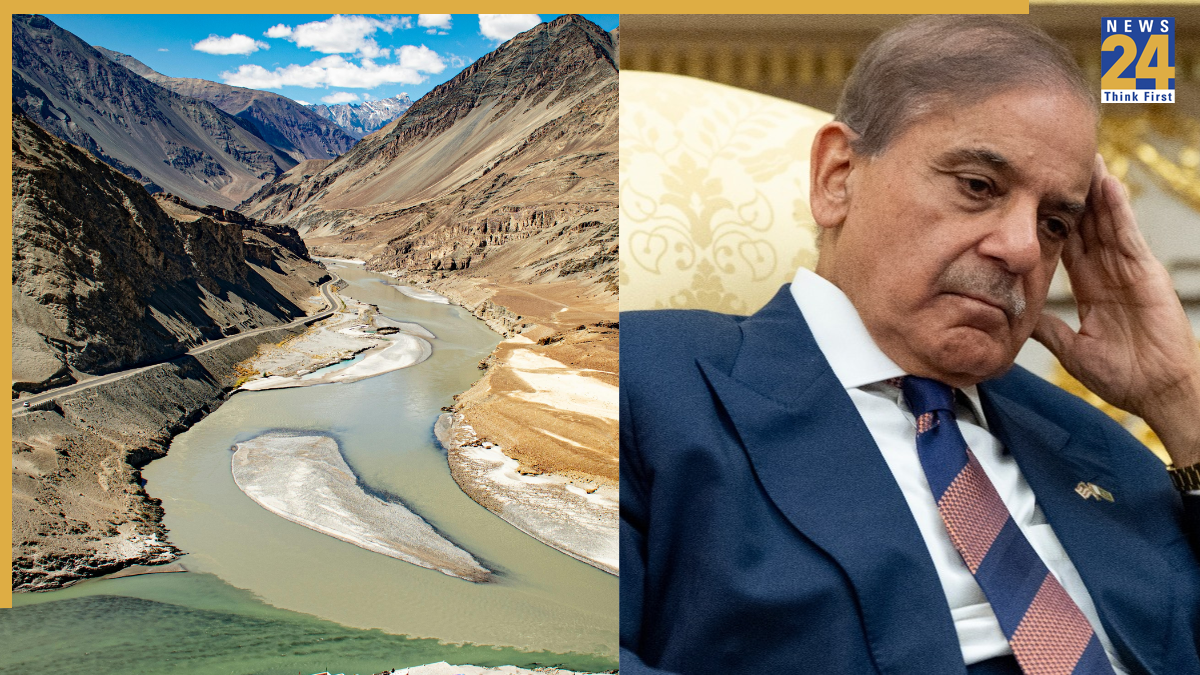
India has reportedly suspended the Indus Waters Treaty for the past one year following the Pahalgam attack. The impact is now becoming visible in Pakistan, where major agricultural regions are facing a severe shortage of irrigation water. Experts warn that if the treaty is not restored, Pakistan could face drought-like conditions, which may seriously affect its food security. The situation has also increased pressure on the Pakistani government, forcing it to choose between supporting terrorism or ensuring water supply for its people.
Agriculture Hit in Khyber Pakhtunkhwa and Sindh
The worst impact is being seen in Khyber Pakhtunkhwa and Sindh provinces. After the wheat harvest, uncertainty now surrounds rice production in these regions. Most rice-growing areas in Pakistan depend heavily on water from rivers under the Indus system. Since rice farming requires continuous water supply, any disruption could severely damage crop output. This has raised concerns for farming, livestock, beekeeping, and overall food security in the country.
What is the Indus Waters Treaty?
The Indus Waters Treaty was signed in 1960 with the help of the World Bank. It is considered one of the most important agreements between India and Pakistan, surviving decades of political tensions and wars. The treaty governs the distribution of water from the Indus river basin, which is vital for agriculture, drinking water, hydropower, and industries in Pakistan.
Under the agreement, the three eastern rivers, Ravi, Beas, and Sutlej, were given to India, while the three western rivers, Indus, Jhelum, and Chenab, were allocated to Pakistan. The treaty was signed in Karachi by then Indian Prime Minister Jawaharlal Nehru and Pakistan’s President Ayub Khan.
Fear Among Pakistani Farmers
Former Director General of Agricultural Research in Khyber Pakhtunkhwa, Dr Abdul Rauf, said rice farming is already under pressure due to climate change and rising costs. The uncertainty caused by water shortages has created fear among farmers, especially those growing rice and fruits like melons. He called the treaty the backbone of Pakistan’s agricultural economy and warned that any long-term disruption in water flow could badly affect crops such as rice, mangoes, melons, and watermelons in Punjab and Khyber Pakhtunkhwa.
Crisis for Pakistan Leadership
Pakistan’s Prime Minister Shehbaz Sharif and Army Chief Field Marshal Asim Munir are reportedly concerned about the situation. Pakistan has taken the issue to an international arbitration court, but India has rejected its role. Meanwhile, tensions have increased as Pakistan continues to issue warnings, but there is no visible impact on India’s position.