World
Bab el-Mandeb and the coming age of chokepoint warfare

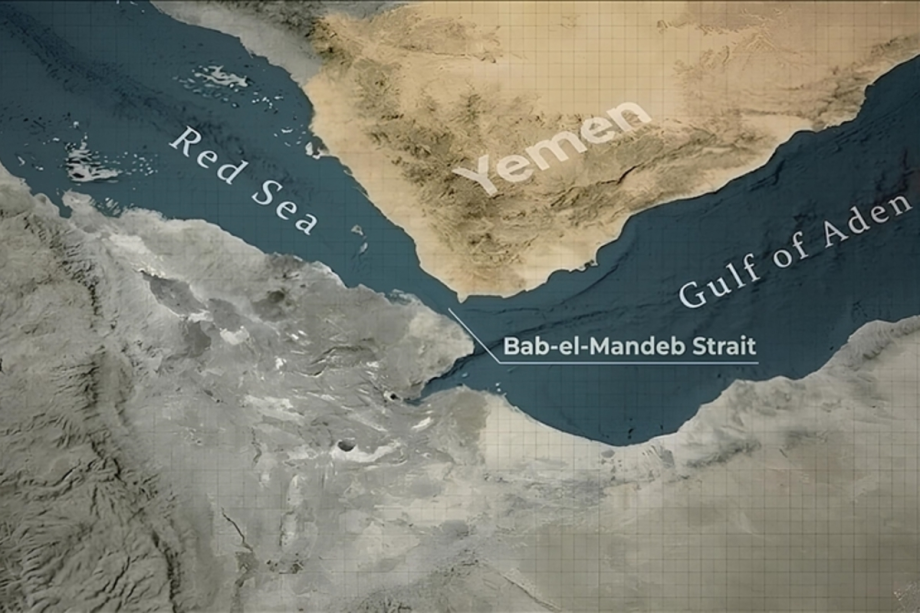
The waters of the Bab el-Mandeb are running red with the blood of a failing international order. For the first time in modern history, two of the world’s most vital maritime chokepoints—the Strait of Hormuz and the Bab el-Mandeb—are under simultaneous, sustained assault. This is not merely a crisis; this is the unravelling of the post-war maritime consensus, and the world is watching with paralysis as a new form of warfare exposes the hollow core of our strategic doctrines.
Consider the mathematics of catastrophe. Before the conflict, roughly 20 million barrels of oil and petroleum products passed through the Strait of Hormuz each day—equivalent to one-fifth of global consumption. The Bab el-Mandeb carried another 9.3 million barrels per day in 2023. Today, the Houthi blockade threatens to sever Saudi Arabia’s last remaining alternative pathway—its Red Sea lifeline through Yanbu—just as Hormuz has been rendered all but impassable.
The cumulative effect? A potential 15 to 17 per cent of the world’s oil supply strangled at the source. The International Energy Agency now estimates that cumulative oil supply losses from Middle East producers have exceeded 1.3 billion barrels. North Sea Dated crude reached an all-time high of $144 per barrel—more than double its pre-war levels.
This crisis is a palimpsest of history’s darkest maritime chapters. The Tanker War of the 1980s saw Iran and Iraq attack merchant vessels for years, culminating in Operation Earnest Will—the largest naval convoy operation since World War II. But that conflict, for all its brutality, remained within the state-versus-state framework. Today’s adversary is something far more insidious: a non-state actor, armed by Tehran, operating from the rugged highlands of Yemen, exploiting every ambiguity in international law with surgical precision.
READ: Iran says Hormuz remains closed, warns of ‘major military operation’
Saudi Arabia’s strategic vulnerability is a tragedy written in pipeline steel. The East-West Petroline, built in the 1980s as a hedge against Hormuz closure, now runs at full capacity—7 million barrels per day—pumping crude across 1,200 kilometres of desert to the Red Sea port of Yanbu. This is not a strategy; this is a single point of failure stretched across a kingdom.
The pipeline snakes through territory vulnerable to Iranian missile strikes, Houthi drone attacks, and internal sabotage. Its pumping stations are exposed; its terminal at Yanbu is a sitting duck. The kingdom has been diverting more than 70 per cent of its crude exports to Yanbu since Hormuz was effectively shut.
Yet even this desperate gambit now hangs by a thread.
The Houthis have signalled they are prepared “to expand the confrontation from Yemen’s territory into the Red Sea maritime domain,” in the words of Chatham House’s Neil Quilliam. This is not a blockade; this is an execution.
The doctrinal paradox at the heart of this crisis is devastatingly simple: modern militaries are expected to operate inside a battlespace shaped by proxy actors who weaponise legal ambiguity and intelligence opacity. Every strike risks breaching international humanitarian law; every delay risks operational failure; every intelligence assessment becomes a probabilistic gamble rather than a definitive guide.
The US has now carried out ten consecutive nights of strikes against Iran, targeting command centres, missile facilities, and maritime capabilities. Iran retaliates by striking US allies—Kuwait, Bahrain, Jordan. Two American service members killed in Jordan; a third missing. The escalatory trap is sprung: each round of strikes generates pressure for the next, with no clear political path to de-escalation.”At some point,” warns former US diplomat Alan Eyre, “a ladder goes in only one direction.”
And yet, the international community dithers.
Meanwhile, the Houthis’ chief backer, Iran, continues to exploit the legal vacuum, providing material support while maintaining just enough operational distance to evade attribution under the International Law Commission’s “effective control” test. This is the alchemy of proxy warfare: transforming state responsibility into a legal mirage that dissolves upon contact with evidence.
The long-arc implications are terrifying. If both chokepoints remain unstable for a protracted period, we will witness a structural metamorphosis of global trade. Shipping routes will shift southward around the Cape of Good Hope, adding weeks and millions in cost. Insurance markets will redraw war risk zones, making the Red Sea and Persian Gulf virtually uninsurable. The Suez Canal’s strategic importance will diminish, weakening Egypt’s geopolitical leverage.