World
Alarm over potential Eilat attack met with skepticism, though not toward Houthi threat

Ever since Hamas launched its unprecedented cross-border assault on southern Israel nearly three years ago, Israelis have been acutely alert to the prospect of another surprise incursion along its borders.
In the immediate aftermath of the October 7, 2023, Hamas attack, attention turned to Hezbollah on the northern border, but recent comments have now raised fears that the most potent threat may actually be a more distant and possibly underestimated adversary: the Houthis in Yemen.
According to several unnamed security sources cited in a Haaretz report last month, Shin Bet chief David Zini warned behind closed doors that the southern resort city of Eilat could be the target of a potential large-scale attack resembling the Hamas invasion of October 7, 2023, in which some 1,200 were killed and 251 were kidnapped into Gaza.
According to the Haaretz report, Zini ordered several senior officials in the Shin Bet to give top priority to preparations for defending against a coordinated land invasion and attack by several terror groups, with the participation of Yemen’s Iran-backed Houthi rebels, either from Jordanian territory or by sea.
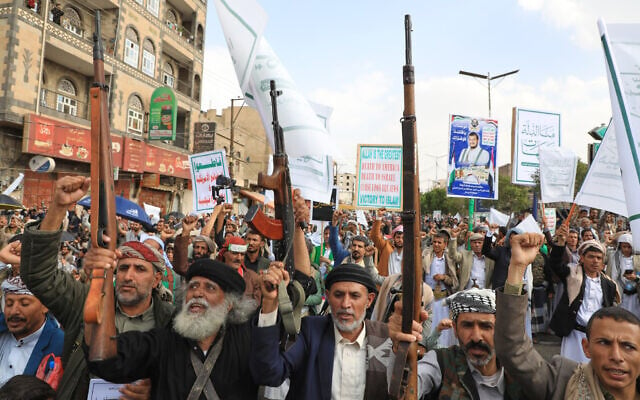
The Iranian terror proxy — whose slogan calls for “Death to America, Death to Israel, [and] a Curse on the Jews” — is based some 1,800 kilometers (1,100 miles) from Israel, but that hasn’t stopped it from targeting Israel in the past. Yet, while the Houthis have fired missiles and drones at Eilat and launched attacks on ships in the Red Sea, disrupting maritime trade routes, the group has never attempted land or sea incursions on Israeli territory. While it is questionable whether the group can mount a significant assault so far from home, analysts say there is little doubt that it has the will to do so.
Situated on the Red Sea and hours away from any other major Israeli town, Eilat is also the closest city to the Houthis’ home base and a likely point of entry, making the area particularly vulnerable, some fear.
According to officials cited by Haaretz, the Shin Bet chief had deemed the Eilat area a security weak spot due to its relative isolation.
While the IDF’s Yoav Regional Brigade, under Southern Command, is responsible for defending the sparsely populated stretch between the Dead Sea and Eilat, the city’s distance from the military’s major ground formations could slow the arrival of reinforcements in the event of a large-scale surprise attack. Ground forces would largely have to travel south through the Negev along a limited number of highways, namely Route 90 and Route 12, before reaching the city.
What the Eilat area does have is the Israeli Air Force’s Ovda Airbase and the Israeli Navy’s Eilat Naval Base, providing significant air and maritime capabilities. However, fighter jets and corvettes may have limited effectiveness against stealthy guerrilla invaders.
The IDF regularly holds military exercises in the Eilat area, most recently on June 23. An army spokesman told The Times of Israel that the drill was a routine exercise and not prompted by Zini’s warnings, while emphasizing that “Israel is always prepared on all fronts.”
Meanwhile, the city’s Yoseftal Medical Center, the only hospital at Israel’s southernmost tip, has reportedly been temporarily reinforcing its staff with medical professionals from other areas of Israel in preparation for a potential future mass-casualty incident.
“Due to the lack of health infrastructure, the lack of medical personnel, and the large evacuation distances, we created a unique plan for the city of Eilat as early as the start of [the war in Gaza], which is regulated by reinforcing capabilities — both of Yoseftal and all surrounding hospitals — in order to provide the best possible response to the wounded,” Dr. Sigal Lieberant, head of the Health Ministry’s General Medicine Division, told reporters in March, according to Ynet news.

However, the measures are more likely tied to missile and drone attacks that have rocked Eilat in the past, most recently in March, when an Iranian missile with a cluster bomb warhead struck the city and injured three.
Security sources cited in the Haaretz report cast doubt on the likelihood of a ground assault, with one telling the outlet that “no one in the security establishment knows what intelligence [Zini] is relying on.”
But some experts believe that Zini’s reported concerns are not unfounded.
Assessing the threat
Ari Heistein, a Yemen affairs expert based in Israel, told The Times of Israel that the possibility of a Houthi incursion should not be dismissed out of hand.
“We should not rule out a [Houthi] multidomain attack combining air, land and sea, along the lines of what Hamas launched on October 7,” said Heistein, a research fellow at the Jerusalem Institute for Strategy and Security
He warned that the Houthis are “adaptable and creative, and Israel should not expect them to do the obvious,” adding that a central takeaway from Hamas’s October 7 massacre should be “the power of surprise.”
Hamas’s attack, a cross-border assault involving rockets, drones, paragliders and coordinated ground incursions into dozens of locations, upended long-held assumptions about Israel’s security vulnerabilities, underscoring the risks of dismissing unconventional attack scenarios.
בעוד שרבים רואים בחות’ים איום שמורכב בעיקר מטילים וכטב”מים ארוכי טווח נגד ישראל, המציאות מסוכנת בהרבה.
מזה למעלה משנה אני מזהיר בפרסומיי השונים מפני שינוי משמעותי במפת האיומים: החות’ים אינם מסתפקים בשיגור טילים וכטב”מים, אלא מתאמנים באופן פעיל לפלישה קרקעית לישראל. כפועל יוצא… https://t.co/jRbaZWtsnC pic.twitter.com/lj4kURBmeF
— Yossi Mansharof (@Yossi_Mansharof) June 23, 2026
Following Zini’s reported warning, Yossi Mansharof, an expert on Iran and Shiite political Islam at the Misgav Institute for National Security & Zionist Strategy, posted a clip on X of footage purporting to show a Houthi military exercise simulating an armed raid on an Israeli community, published by Al Jazeera in February 2024.
“For over a year now, I have been warning in my various publications about a significant shift in the threat landscape: the Houthis are not content with launching missiles and drones, but are actively training for a ground invasion of Israel,” Mansharof wrote in the post.
According to an analysis published by Mansharof in November, the Houthis have been “conducting exercises simulating a ground invasion of Israel” since the war in Gaza erupted.
“Their media outlets have documented drills involving tunnel infiltrations, the seizure of Israeli bases, and the abduction of soldiers. These exercises include the use of drones, tanks, machine guns, missiles, and rockets, tools intended to facilitate the conquest of Israeli territory,” he cautioned.
According to him, the Houthis have also implemented a training program among their ranks titled “Al-Aqsa Flood,” the same name used by Hamas to refer to its October 7 onslaught. Mansharof wrote that the program is “aimed at preparing thousands of operatives to move through Saudi Arabia or Iraq into Jordan, arm themselves there, and then invade Israel from the east.”
However, other analysts were more skeptical about the likelihood of a Houthi incursion.
Jonathan Ruhe, a military expert at the Jewish Institute for National Security of America, said he was “surprised” at Zini’s reported warning.
While Ruhe did not doubt the Houthis’ intent to harm Israel, he questioned the group’s military capabilities to launch such an attack, noting that “they don’t really have any expeditionary capabilities.”
Still, he emphasized, “It’s important for everyone to keep in mind that things that seem fantastical once upon a time have all become real in the past couple years — in a post-October 7 world, anything is possible.”
Getting to Israel
Heistein stressed that the Houthis have several possible routes for mounting a ground operation, and that “Israel should be monitoring all of them.”
“Yemen does not border Israel, so any country they staged an attack from would be unlikely to welcome foreign radicals stockpiling arms on its soil,” he said. “But states with weak sovereignty may fail to detect and disrupt such plans, and for that reason, the risk cannot be dismissed.”
Zini’s reported warning is not the first time an Israeli official has sounded the alarm regarding the threat of a Houthi ground invasion. In November, Defense Minister Israel Katz reportedly told the Knesset Foreign Affairs and Defense Committee that armed groups in Syria, among them the Houthis, were considering invading the Golan Heights.
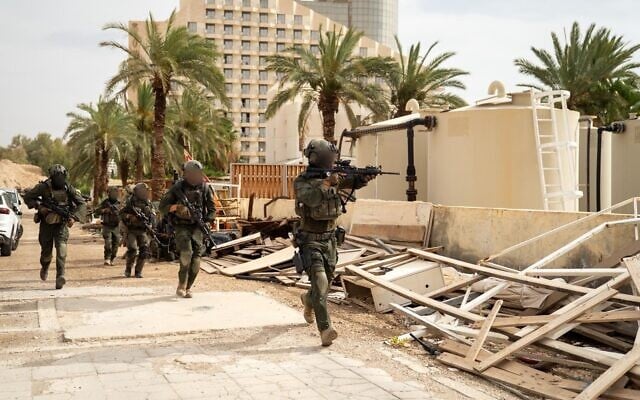
“Given the Houthis’ strong relationship with Hezbollah, they could attempt an attack across Israel’s northern border, but that is a small and heavily surveilled area,” Heistein said, instead pointing to the longer and more difficult to monitor Jordanian front, which “already sees significant smuggling,” as a more plausible option.
In the past year and a half, there have been frequent attempts to bring weapons and drugs over the Jordanian border.
Heistein suggested that the Houthis could partner with “established criminal networks or other terrorist groups” in Jordan in order to bolster such an operation.
Ruhe said he would not rule out such a scenario, but that geographical constraints would limit a Houthi attack to a small-scale “terrorist-style raid” rather than a larger October 7-style combined-arms operation, due to the challenge of smuggling fighters from Yemen to Israel undetected. The 2,030-kilometer (1,260-mile) overland journey would require traversing Saudi Arabia and Jordan, neither of which is sympathetic to the group.
Comparing the Houthis to other Iranian terror proxies such as Hamas and Hezbollah, Ruhe said, “a big part of that threat is proximity… The Houthis just don’t have that level of access to Israel.”
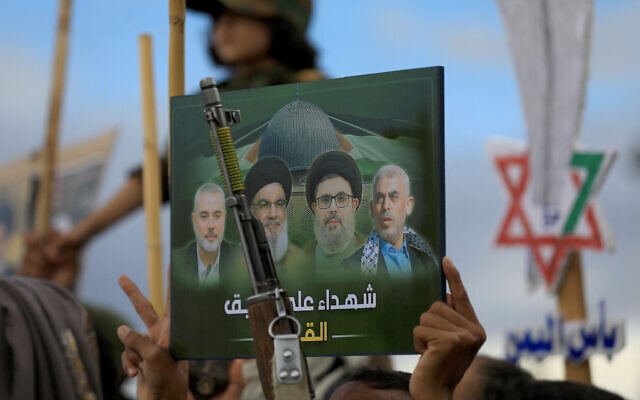
“By the time the Houthis — assuming they’d be able to get that far — get all the way up to Israel, they’d be at the end of a pretty long road, and they wouldn’t be able to conduct a very large-scale attack,” he explained. Even a small ground incursion combined with missile and drone attacks would have limited effectiveness.
“Israel has shown by and large that they can handle that,” Ruhe said.
Heistein noted that while a Houthi invasion could range “from a small-scale raid by a handful of fighters with light weapons, essentially a propaganda exercise, to a full-scale invasion,” the latter would be “far harder to orchestrate and execute.”
There is no public evidence that plans for an attack on Israel have progressed beyond training in Yemen, but recent events have underscored concerns about the vulnerability of the Eilat area to a seaborne attack.
One such incident was an attempted infiltration into Eilat from Jordan via the sea on May 29.
According to the IDF, sailors of the 916th Squadron aboard a Dvora-class patrol boat spotted a suspect on a jet ski who crossed into Israeli waters in the Eilat Bay area. After firing warning shots, troops shot at the suspect before he turned back to Jordan. A military source added that the suspect was injured, possibly by the gunfire, and was being interrogated by Jordanian security officials.

However, Ruhe largely dismissed the threat of a naval attack by the Houthis.
“They don’t really have any sort of amphibious assault capability that would enable them to go the entire length of the Red Sea,” he said. “Amphibious operations are the hardest thing that any military can try to do,” Ruhe added, noting that even “the Israeli Navy would struggle to do an assault in the opposite direction.”
Large-scale Amphibious attacks require militaries to transport troops and heavy equipment across open water, land on often-defended coastlines and sustain forces on shore — a logistically and operationally complex operation that is uncommon in modern warfare.
While the Houthis could attempt to send a handful of armed commandos on rubber dinghies to assault Israel by sea, it’s unlikely they would be able to reach Israel without first being detected and halted.
Preventing the next attack
Were the Houthis to somehow reach Israel’s shores, though, their formidable arsenal could prove a serious challenge, especially in the case of a combined land incursion and air assault by missiles and drones.
The rebel group’s vast military holdings include both Iranian-supplied and domestically produced medium-to-long-range ballistic missiles, cruise missiles and drones, which they have already used against Israel, coupled with an array of small arms, including assault rifles, machine guns and RPGs.
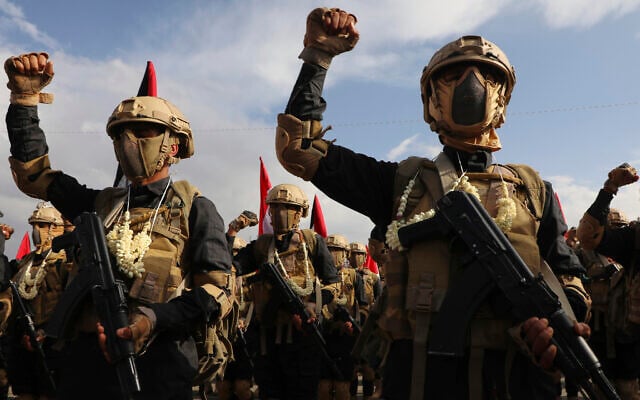
Backed by Iran and in control of significant swaths of Yemen despite a years-long military campaign against them by the Saudis and Emiratis, the Houthis have already proven an ability to achieve significant gains with relatively little.
Following the eruption of war in Gaza, the group began targeting maritime shipping through the Red Sea, crimping global trade. Houthi missile attacks on Israel also managed to briefly halt air traffic and to hamper daily life for millions, who are forced to scurry for shelter every time they launch even a single projectile.
Starting in November 2023, the Houthis launched over 130 ballistic missiles and dozens of explosive-laden drones at Israel, including one that killed a civilian and wounded several others in Tel Aviv in July 2024, prompting Israel’s first strike in Yemen.
In response, Israel attacked Houthi infrastructure and leadership in Yemen 19 times with the Israeli Air Force and Israeli Navy, though it’s unclear what effect the attacks have had.
The Houthis also survived a weeks-long US air campaign against the group, eventually brokering a ceasefire deal with Washington, even as they continued to target Israel and shipping.
Only with the signing of a ceasefire in Gaza did the group halt its attacks, though it threatened to resume launches in support of Iran after Israel and the US began attacking the Islamic Republic.
Heistein emphasized deterrence as Israel’s most useful tool for preventing a Houthi assault, warning that their gains in carving out power would be jeopardized by a potential conflict.
Israel should signal “that even a minor attack, or an attempt at one, will bring outsized consequences for the Houthi economy and the regime itself.”
“Governance has always been their weak point: if the economy is hit hard and the Houthis can no longer pay their soldiers or security forces, controlling an angry population may become a serious challenge,” he said. “If that coincides with the targeting of senior regime officials, it could create a perfect storm for the Houthi regime.”
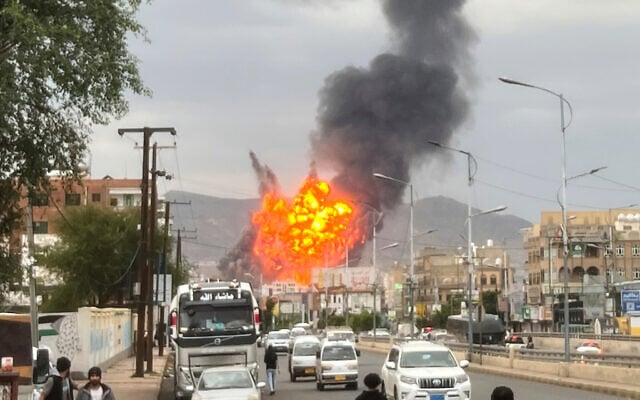
According to the expert, countering the Houthis requires both regional cooperation to prevent the group from operating from neighboring countries and stricter enforcement of sanctions and arms embargoes to limit its resources.
Yet with Israel’s international standing arguably at its lowest point since its founding, Jerusalem may have trouble rallying international support.
Despite Ruhe’s skepticism towards the likelihood of a Houthi ground incursion, he did not rule out the threat of a future attack by the Yemen-based group or other Iranian proxies in the region, especially as Iran seeks to recreate its axis of resistance after surviving the US-Israeli attacks earlier in the year.
“The Iranians want [a ceasefire] now, but at some point they’ll be more than happy to — when it’s convenient or possible — try to rebuild Hezbollah, the Houthis, other proxies around the region, and get them ready to attack Israel again,” he warned.