Topnews
Akume: Atiku part of decision to adopt rotational presidency after June 12 annulment

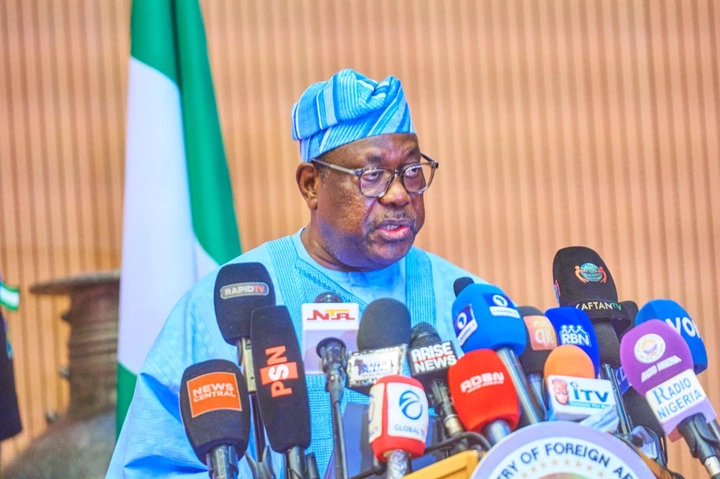
The Secretary to the Government of the Federation (SGF), George Akume, has disclosed that former Vice-President Atiku Abubakar was among the political leaders who agreed to adopt a rotational presidency after the annulment of the June 12, 1993 presidential election.
He made the disclosure on Tuesday whilst answering questions at a World Press Conference in Abuja, which was part of events marking Nigeria’s 27th Democracy Day anniversary.
Recounting the political fallout from the annulment of the election, which is widely regarded as the freest and fairest in Nigeria’s history and was won by Chief MKO Abiola, the SGF said the crisis required “far-reaching political decisions aimed at preserving national unity and strengthening the country’s democratic foundation.”
He said leaders of the Peoples Democratic Party (PDP) met in Kaduna under the late Chief Solomon Lar and Alhaji Adamu Ciroma to map a way forward, with “power shift and the party’s presidential candidature” high on the agenda.
“It was a tough argument before the issue of rotational presidency was agreed on. At the end, we had to concede. We must do this. June 12 annulment had complicated the whole thing. It was finally agreed that we’ll be alternating between North and South.
“Atiku was one of the leaders at that meeting, which was convened by Chief Solomon Lar. He was part of that agreement,” Senator Akume stated.
Akume said the decision to alternate presidential power between the North and South was aimed at addressing the political consequences of the June 12 annulment and promoting inclusivity and national cohesion.
Reflecting on the significance of June 12, he described the annulment as “a painful setback to the democratic aspirations of Nigerians,” adding: “Abiola won that election round and square. That election was annulled by the military government. It was very painful because the people spoke and they spoke freely. They made their own choice.”
The SGF said one key lesson from 1993 is “that the voice of the people must always be supreme; it must be sacrosanct. That’s the beauty of democracy. We prefer the ballot to bullets.”
Akume also expressed confidence in Nigeria’s democratic institutions, particularly the Independent National Electoral Commission (INEC), saying the country had learnt valuable lessons and would not allow a repeat of such an annulment.