Topnews
Aisha Yesufu Accuses Wike Of Illegal Land Grab To Reward Nigerian Judges

ABUJA, NIGERIA — Human rights activist and social critic, Aisha Yesufu, has launched a blistering attack against the Minister of the Federal Capital Territory (FCT), Nyesom Wike, accusing him of openly bragging about an illegal land grab used to fund housing projects for judicial officers.
 Loading …
Yesufu also turned her sights on the Nigerian judiciary, declaring that any judge who accepts the controversial housing gifts under the current FCT scheme is partaking in an illegality and lacks the moral justification to preside over trials of citizens accused of similar infractions.
The Land Grab Allegation
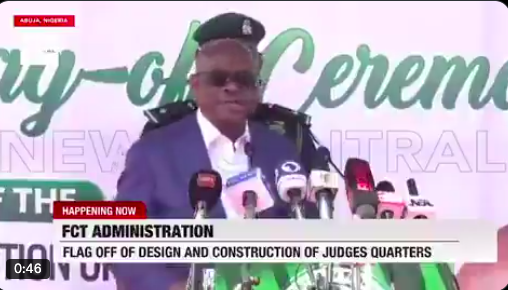
The activist’s outburst follows public statements made by Wike regarding the acquisition of prime land in Abuja for the construction of luxury quarters for judges. Yesufu pointed out that the Minister openly admitted to circumventing standard regulatory channels to seize the property from construction giant Julius Berger.
“Wike told the nation unprovoked how he grabbed Julius Berger’s land in 2024!” Yesufu declared in a viral public statement. “He even repeated it to the judges themselves!!!! He gleefully told the world how he unjustly grabbed that land without following due process.”
The outspoken critic maintained that the executive’s high-handed approach to land administration in Abuja sets a dangerous precedent, especially when it is openly admitted in front of the custodians of the law.
A Compromised Judiciary?
A central point of Yesufu’s critique is the ethical compromise of the judicial officers who are beneficiaries of the FCT administration’s luxury housing scheme. She argued that accepting properties built on allegedly confiscated land strips the bench of its independence and moral authority.
“Everyone of those judges that accept those houses are partaking in illegality and have no moral justification to trial people doing same!” Yesufu insisted.
The controversy comes amidst ongoing national debates regarding judicial independence in Nigeria. Critics and legal scholars have repeatedly questioned the propriety of the executive arm of government providing direct housing and vehicular gifts to judges, arguing that such practices subtly undermine the separation of powers and compromise the neutrality of the courts in cases involving the state.
The Ministry’s Defense
The FCT Ministry has previously defended its aggressive housing and welfare policy for judicial officers, framing it as a strategic presidential directive to secure the welfare of judges, insulate them from corruption, and modernize the judicial infrastructure in the nation’s capital.
Wike’s camp has consistently dismissed criticisms of his administrative style, insisting that the revocation and reallocation of undeveloped or underutilized plots within the FCT follow the statutory powers vested in his office under the Land Use Act.
However, with prominent activists like Yesufu framing the welfare scheme as an institutional reward built on executive lawlessness, pressure is mounting on the National Judicial Council (NJC) to review the guidelines governing how judges accept gifts from the executive branch.
Related