World
After Gaza, who represents Palestine?

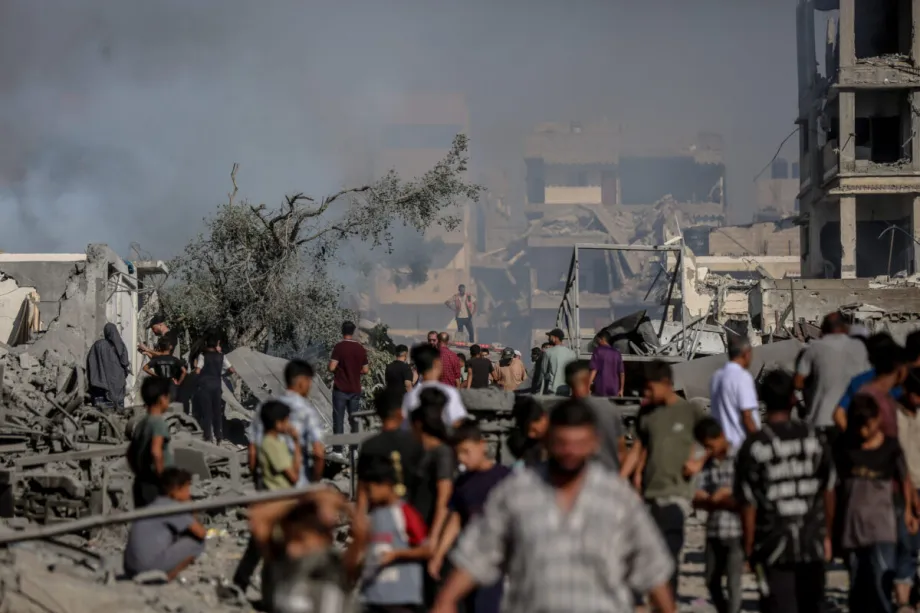
More than a thousand days of war on Gaza have destroyed far more than cities, hospitals and refugee camps. They have also exposed the exhaustion of a political framework built more than three decades ago under the Oslo Accords.
As the Palestinian people endure perhaps the most dramatic moment in their history since the Nakba of 1948, their national institutions remain fragmented, outdated and increasingly incapable of reflecting the political diversity of Palestinian society and the forces leading the struggle against occupation.
Thirty years after Oslo, there is still no Palestinian state. Israeli settlement expansion in the occupied West Bank has accelerated, East Jerusalem continues to face de facto annexation, and Gaza has endured successive wars and a devastating blockade. A political process that was meant to deliver independence has instead evolved into the management of an ever more entrenched occupation.
The Palestinian Legislative Council remains effectively paralysed, elections have been repeatedly postponed, and criticism has mounted—both within Palestinian society and among international observers—over corruption, patronage, nepotism and the absence of meaningful political reform.
Yet reducing this crisis to the figure of Abbas alone would oversimplify a much deeper problem. The central question is no longer merely who leads the Palestinian Authority.
Rather, an increasingly important debate among Palestinian intellectuals, political organisations and civil society concerns the reconstruction of the Palestinian national movement itself and the redefinition of the institutions entrusted with representing it.
Within this debate, one political fact cannot be ignored.
Hamas won the last Palestinian legislative elections in 2006, securing a parliamentary majority that has never again been tested through the ballot box.
Since then, it has consolidated its position as one of the principal actors in Palestinian politics—not only through its social and political organisation, but also through its role in the resistance, ceasefire negotiations, prisoner exchanges and the administration of Gaza.
The same reasoning applies to Palestinian Islamic Jihad. Although it has historically remained outside electoral politics, its political and military influence in the occupied Palestinian territories, particularly in the West Bank, has become an undeniable component of contemporary Palestinian political reality. Ignoring this influence means overlooking a significant part of the internal dynamics of Palestinian resistance.
Fatah itself faces similar challenges. Internal divisions, the marginalisation of historic leaders and the concentration of decision-making within the current leadership have weakened the movement that for decades led the Palestinian national struggle.
Here too, many Palestinian voices have called for a process of renewal capable of restoring the movement’s representativeness and strengthening its contribution to a shared national project.
Against this backdrop, it is difficult to imagine that merely organising elections—without first reaching a broader political consensus—will be sufficient to overcome the current crisis of legitimacy.
A growing number of Palestinian analysts and political figures argue that institutional reconstruction requires comprehensive reform of the Palestine Liberation Organisation (PLO), the inclusion of the principal political forces that remain outside its structures, and the reintegration of the Palestinian diaspora into national decision-making.