World
50000000 people at risk: Himalayan glaciers melting rapidly due to.., scientists say intense heatwave can cause…

1 / 11
Did you know that the impact of this climate change will be so severe in the future that it could devastate the lives of millions of people in India and other countries? Research shows that changes in the environment due to pollution and global warming are directly affecting glaciers, rivers, and oceans. Let’s read the full report here.
Himalayan heat raises serious climate concerns

2 / 11
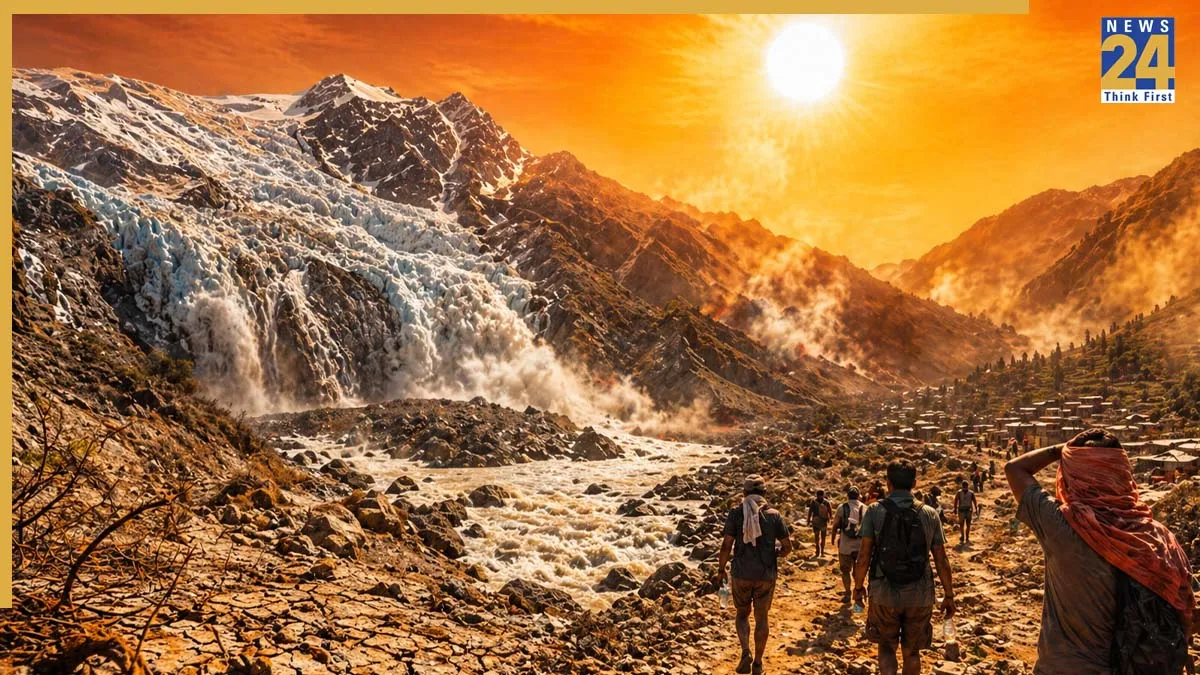
The effects of rising temperatures worldwide are now clearly visible in the mountains. According to media reports, snow is rapidly receding in the Himalayan region, and scientists believe that if this situation continues, a major water crisis could arise in the future.
How melting glaciers could affect millions of lives

3 / 11
The Himalayan glaciers are a major source of water for many countries, including India, Nepal, Bhutan, and Pakistan. The rivers that flow from these glaciers provide drinking water, irrigation for agriculture, and daily needs to millions of people. However, when these glaciers are affected, humanity will be directly impacted.
Why are himalayan glaciers melting so fast?
4 / 11
According to experts, pollution, deforestation, increasing urbanization, and greenhouse gas emissions are the main causes. Warmer winds and less snowfall are also weakening glaciers, causing them to shrink and recede.
Gangotri glacier shows alarming signs of retreat

5 / 11
According to the report, the Gangotri Glacier in Uttarakhand, considered the main source of the Ganges River, is receding every year, and its length has decreased significantly over the past several decades, which is considered a serious warning.
Impact on rivers, farming and hydropower

6 / 11
If glaciers continue to melt rapidly, the risk of flooding may increase initially. If this continues, rivers will begin to recede after floods, directly impacting agriculture, power generation, and rural livelihoods.
Nepal and neighbouring regions face rising climate risks

7 / 11
Mountainous countries like Nepal are experiencing increasing rainfall erraticness, landslides, and flash floods. Climate change is putting increasing pressure on villages, agriculture, and water sources.
Hindu Kush Himalayas may lose 75% ice by 2100

8 / 11
India, Pakistan, Nepal, and Bhutan, which lie in the Hindu Kush Himalayan region and contain a significant portion of the world’s population, are at greatest risk of these impacts. Global warming is rapidly melting glaciers in the Hindu Kush Himalayan region, threatening to lose 75% of their ice by the end of the century.
Scientists issue major global warming warning

9 / 11
International organizations like ICIMOD have warned that if global warming isn’t kept below 1.5 degrees Celsius, 80% of glaciers could disappear by the end of this century, directly impacting ecosystems and human life. The Hindu Kush Himalayan region is a significant mountain range that stretches across eight Asian countries.
Could El Niño make 2026 even hotter?

10 / 11
Regarding the changing weather, a team of scientists says that a very strong El Niño is going to form in the year 2026. People are also calling it El Niño or Godzilla El Niño. According to the UK Meteorological Department, temperatures in the tropical Pacific Ocean have been rising at a rate never seen before this century over the past month.
What is El Nino?

11 / 11
An El Niño, Super El Niño, or “Mega El Niño,” is an extremely powerful weather event in the Pacific Ocean, where sea surface temperatures rise +2 degrees or more above normal. This rare and destructive climate cycle causes extreme heat, drought, and crop failures globally. Scientists say this is increasing the risk of a severe heatwave in 2026-2027.