Trends
37 Miners’ Death: CSOs Demand Mining Sector Overhaul; Illegal Operations Deepen, Fuel Revenue Flight

ABUJA — The last thing many of the miners arrested around the Wushishi-Lukoto axis of Niger State could have expected when they were taken into custody was that some of them would not come out alive.
Between September 15 and 16, operatives of the Nigeria Security and Civil Defence Corps, NSCDC, raided suspected illegal mining sites west of Minna and detained about 65 artisanal miners.
By the early hours of September 17, dozens were dead inside an NSCDC detention facility along David Mark Road, Minna. Hospital footage showed 33 bodies in one ward. The Niger State governor subsequently confirmed that 37 detainees had died.
The official explanation initially pointed to a suspected disease outbreak, with the bodies sent for medical examination.
But survivors gave a different account, describing a severely overcrowded cell in which breathing became difficult. An intelligence assessment reportedly also pointed to overcrowding and inadequate ventilation as the likely causes of the deaths.
Whatever the final findings establish, one fact is already beyond dispute; 37 people arrested over alleged illegal mining ended up dead in state custody within one or two days.
Some of those arrested were minors or very young people. Amnesty International subsequently demanded an independent investigation into the deaths.
By September 18, anger had spilled onto the streets of Minna. Protesters demanded answers. Police used tear gas and, according to some accounts, live ammunition to disperse the crowd. An overnight curfew was imposed, an NSCDC commander was suspended and government announced an investigation.
But beneath the immediate questions about detention conditions and responsibility for the deaths lies a much larger question.
Why is the Nigerian state so capable of finding the person holding the digger and shovel, yet seemingly less capable of identifying and dismantling the people who finance, buy, transport, and profit from the minerals that the digger and shovel produce?
That is the question Minna has forced back into the national conversation.
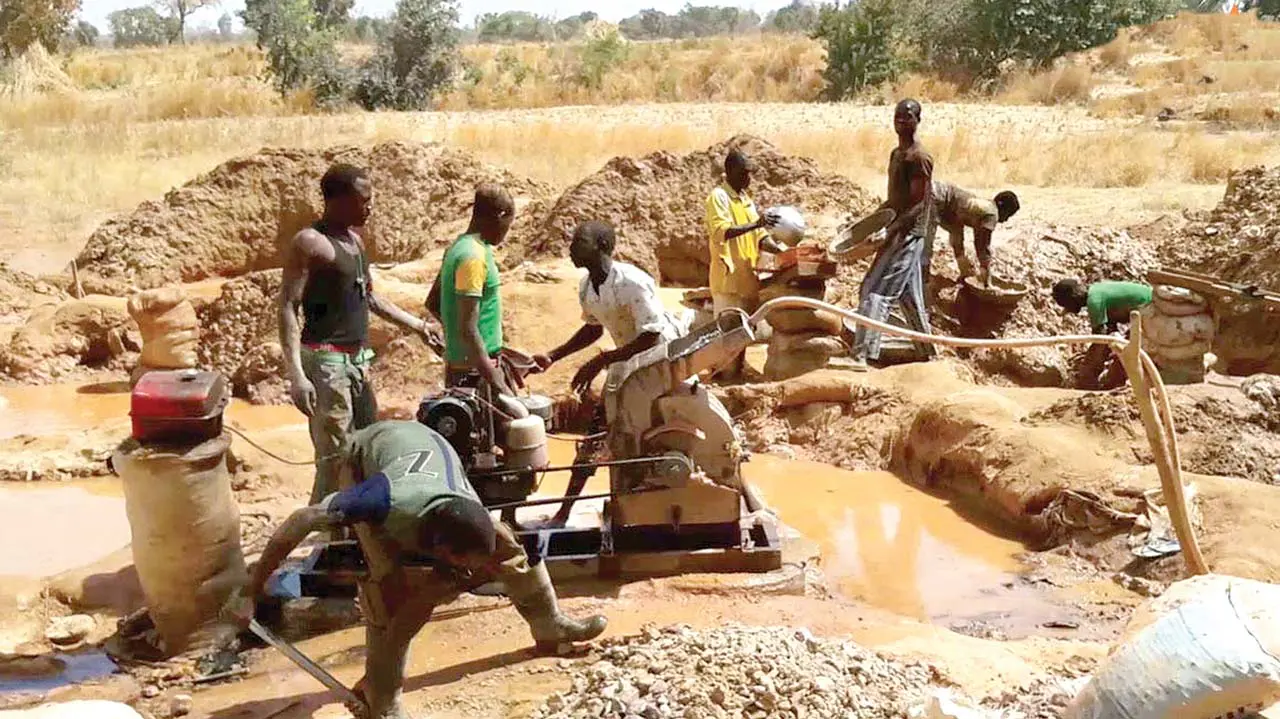
The tragedy has become a grim window into Nigeria’s informal mining economy.
The men, boys, and other artisanal miners at the center of the incident were allegedly operating illegally. That point matters because illegal mining carries environmental, economic, and security consequences, and the state has a responsibility to enforce its laws.
But the manner in which the enforcement chain operates is now under scrutiny.
Dr Andrew Mamedu, Country Director, ActionAid Nigeria, believes the deaths should not be examined only as a detention tragedy.
“We must distinguish between the poor artisanal miner digging to survive and the organised interests financing, buying and profiting from illegal mining. The enforcement net should not catch only the poorest person at the bottom while those making the biggest profits remain untouched,” Mamedu said.
He put the question even more directly: “Go after the major beneficiaries of illegal mining, not only the poorest people at the bottom of the chain.”
That distinction may be crucial to understanding the country’s mining crisis.
For the person at the pit, the mineral is a livelihood. Further up the chain, it can become a commodity, an investment, an export and, potentially, a source of considerable profit.
The identities and activities of those alleged beneficiaries remain questions to be established through evidence and investigation.
But several other civil society organisations insist that enforcement which ends at the mining pit is unlikely to dismantle the wider illicit economy.
Philip Jakpor, Executive Director, Renevlyn Development Initiative, RDI, also said security agencies should focus on the bigger players.
“Arresting artisan miners trying to eke out a living cannot be a big burst when the big players walk freely on the streets,” Jakpor stated.
“We need to know what the young men were mining; who owns the particular sites where they were apprehended or if the deaths were the silencing of pawns to shield some powerful individuals,” he added.
The allegation about the deaths being intended to silence anyone remains an allegation and requires investigation.