Viral
12 Years On: Suswam’s ₦3.1bn Fraud Trial Stalls as Defence Yet to Open Case

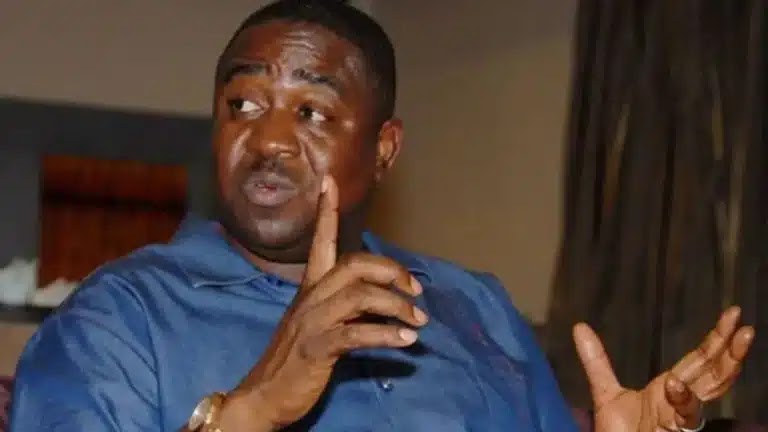
The long-running trial of former Benue State Governor, Gabriel Suswam, over allegations of diverting ₦3.1 billion in public funds has entered its 12th year, with court proceedings yet to reach the defence stage despite the prosecution having concluded its case.
Suswam and his former Commissioner for Finance, Omodachi Oklobia, have been facing prosecution by the Economic and Financial Crimes Commission (EFCC) since November 2015 over allegations bordering on money laundering and the alleged diversion of proceeds from the sale of Benue State Government shares in Dangote Cement Plc.
According to the anti-corruption agency, the funds in question, amounting to approximately ₦3.1 billion, were realised from the sale of state-owned shares in the cement company but were allegedly diverted for personal purposes rather than being remitted to government coffers. Both defendants have consistently denied wrongdoing and pleaded not guilty to the charges.
Court Orders Defendants to Open Defence
After years of legal arguments, procedural delays and changes in judicial handling of the matter, the case appeared to be approaching a decisive phase in July 2025 when Justice Peter Lifu of the Federal High Court in Abuja dismissed a no-case submission filed by the defendants.
In his ruling delivered on July 23, 2025, the judge held that the prosecution had presented sufficient evidence to establish a prima facie case against the defendants, requiring them to enter a defence.
The ruling was widely viewed as a significant milestone in a case that had already spent nearly a decade in the judicial system.
However, despite the court’s directive, defence proceedings have yet to commence almost one year later.
Series of Adjournments Prolong Trial
The court initially scheduled September 25, 2025, for Suswam and Oklobia to begin presenting their defence. However, proceedings failed to move forward as expected.
The matter was subsequently adjourned to January 20, 2026, for the adoption of final written addresses before being shifted again to May 29, 2026.
When the matter came up in May, the hearing could not proceed because the court was not sitting, resulting in another postponement.
Justice Lifu thereafter fixed July 17, 2026, as the new date for the continuation of proceedings.
The repeated adjournments have further extended a case that has already spent more than a decade within Nigeria’s criminal justice system.
Trial Marked by Judicial Changes
Since its commencement, the case has experienced several disruptions arising from judicial transfers, appeals and allegations affecting the presiding judges.
Justice Ahmed Mohammed initially handled the matter after the defendants were arraigned in 2015. However, he stepped aside in 2016 following media reports that questioned his impartiality in the case.
Although he later resumed proceedings, he withdrew again in 2019 after another publication raised similar concerns regarding his continued handling of the trial.
Following his withdrawal, the matter was reassigned to Justice Okon Abang, who proceeded with parts of the prosecution’s case and heard testimonies from some witnesses.
However, the legal battle took another turn when the Court of Appeal ruled that the case file should be returned to Justice Mohammed after an appeal filed by Suswam.
Fresh delays emerged in 2023 when Justice Mohammed was elevated to the Court of Appeal, making it impossible for him to continue handling the matter. The case was subsequently reassigned to Justice Peter Lifu.
EFCC Calls Nine Witnesses
The EFCC eventually closed its case after presenting nine witnesses before the court.
Among those who testified were investigators, officials from the Benue State Ministry of Finance, representatives of stockbroking firms involved in the share transaction and a bureau de change operator.
The prosecution relied on documentary and oral evidence in an effort to establish its allegations that proceeds from the sale of government-owned shares were unlawfully diverted.
Following the close of the prosecution’s case, the defendants sought to have the charges dismissed through a no-case submission. However, the court ruled that sufficient evidence existed to warrant a defence.
Questions Over Delayed Justice
The prolonged nature of the proceedings has continued to attract public attention, particularly because the case remains unresolved more than 11 years after it was first filed.
Legal observers have pointed to the repeated adjournments, judicial reassignments and procedural setbacks as factors contributing to the slow pace of the trial.
Meanwhile, Suswam, who governed Benue State between 2007 and 2015 and later served as a senator, has remained active in Nigeria’s political landscape and is reportedly considering another electoral contest while the criminal case remains pending.
With the next hearing scheduled for July 17, 2026, attention will once again focus on whether the defence will finally begin presenting its case in one of Nigeria’s longest-running high-profile corruption trials.